Governance Isn't a Meeting Anymore
Governance as a meeting is a norm worth rewriting. Governance as architecture is what replaces it.

Governance as a meeting is a norm worth rewriting. Governance as architecture is what replaces it.
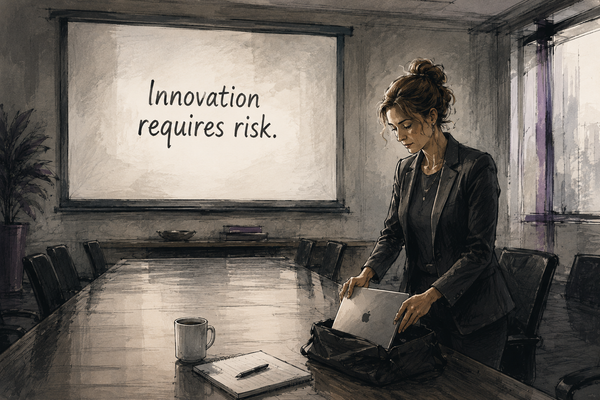
For years I've told leaders to embrace failure as the cost of building anything new. Then a few people asked if I'd really give up a steady income to go out on my own, and I caught myself holding my own risk to a harder standard than theirs.
People don't resist change, they resist ambiguity: not knowing if they'll still belong, still matter. Change management handles the mechanics. Leadership creates clarity from uncertainty, and gives people real agency in how they move through it.

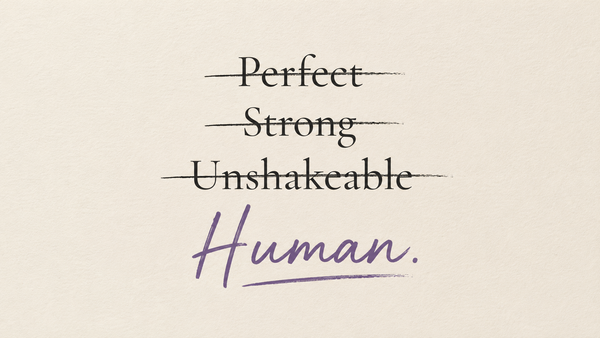
We expect leaders to look composed on their worst days. That standard is a norm worth rewriting. Leadership isn't measured by avoiding stumbles, but by recovering from them, giving yourself the grace you offer everyone else, and standing back up.
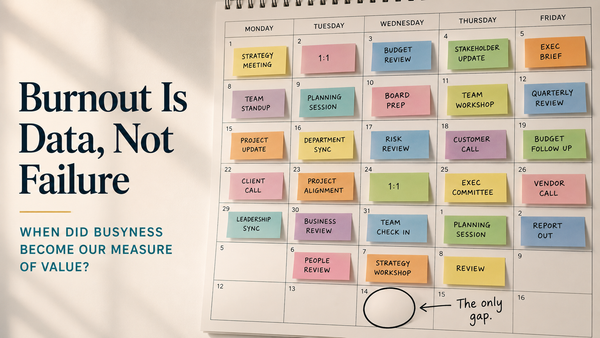
Most leaders treat burnout as a personal failing to push through. It's not. It's information: a signal your role has outgrown what one person can sustain. The skill isn't pushing harder. It's paying attention before you have no choice but to stop.
We look at successful careers and assume the sequence was obvious all along. The promotion appears inevitable. The move looks strategic. The risk seems intelligent.

We have built whole systems around the destination and not left enough space for what the journey, and the people we meet along it, have to tell us.

The longer you have led, the more certain you tend to be that you know your organisation. New research across 300,000 people in 20 countries suggests that certainty is one of the least reliable things about seniority.

41% of technology leaders are considered unable to keep pace with change by their own boards. They are calling it a capability gap. When nearly half the C-suite lands in the same place, that is a pattern. Patterns live in systems, not people.

There is a difference between resilience and self-punishment, and a lot of high achievers were taught to treat them as one and the same. Replacing the pursuit of perfection with the pursuit of what is actually possible is not giving up on standards.