The Unkindness of Being Nice
The nice action is actually an unkind action. One step further, the nice action isn’t altruistic. It’s not really being done for the other person; it’s being done because you don’t want to be uncomfortable.
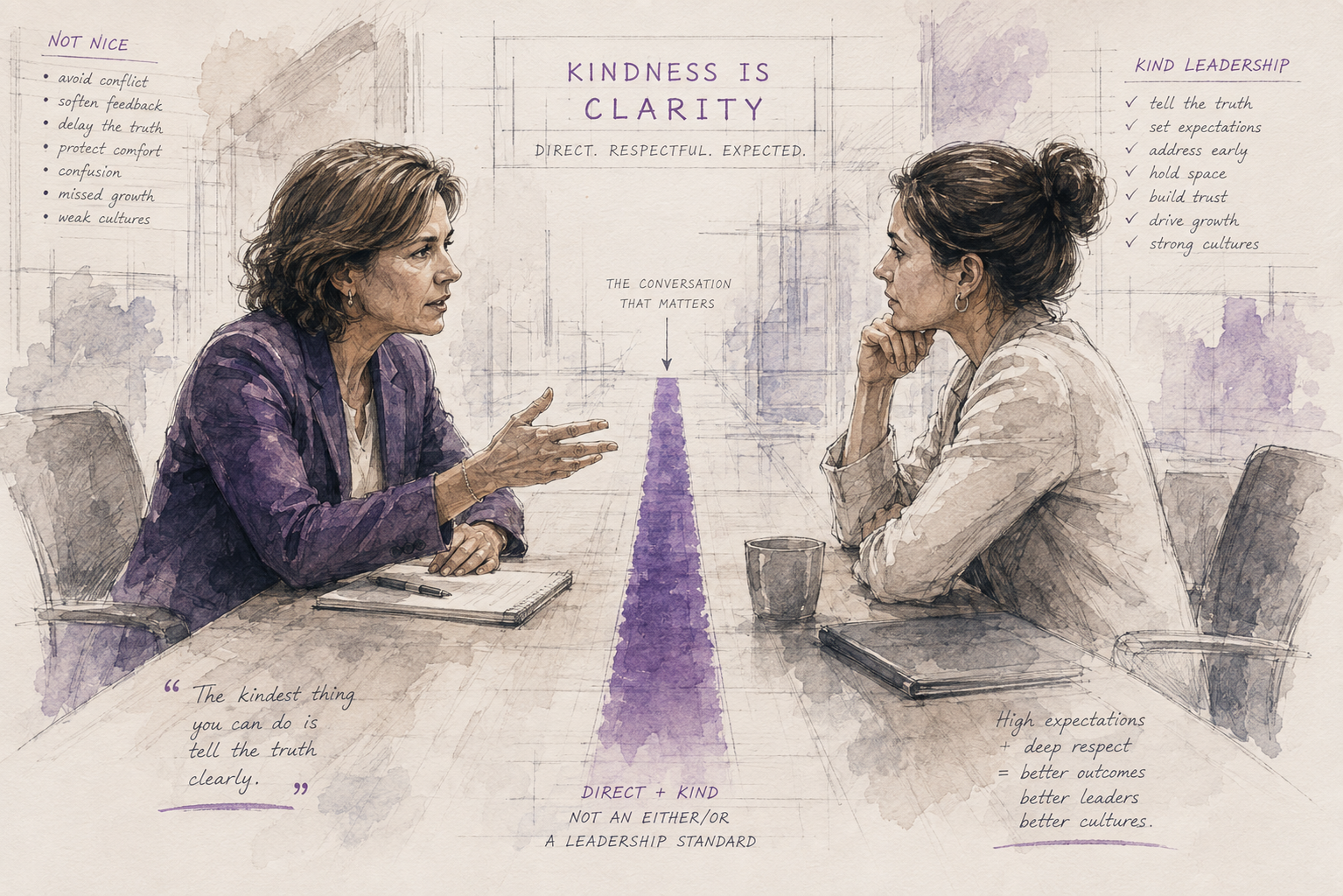
One of the most common pieces of feedback I give senior leaders is surprisingly simple: “Stop trying to be nice.”
I am usually met with a look of surprise, especially from women. We have spent years being told that good leaders are supportive, approachable, and empathetic. Somewhere along the way, many people translated that into believing they should avoid making others uncomfortable. You can’t be empathetic AND have a hard conversation. Or can you?
Earlier in my career, I was told I was “too New York.” I knew exactly what they meant: ‘too direct.’ I translated the feedback as ‘be nicer.’ For a while, I tried, but it hurt me, my team (who stopped getting feedback they needed), and my career. It took me time to understand that I didn't need to stop being the New Yorker I am at heart. I needed to learn how to pair that directness with kindness. When I did, it changed both my career and my perspective on leadership.
People mistake that constant need not to upset or disrupt as being nice. It may be nice, but it isn’t kind. I remember being asked whilst in an interview for a senior leadership role, “What is your leadership style?” I answered, “I am not a nice leader, I am a kind leader.” That was met with the same surprise I mentioned above. I had to explain.
Kindness is telling someone the truth they need to hear, even when it is uncomfortable. Kindness is setting clear expectations. Kindness is addressing behaviour before it becomes a bigger problem. Kindness is having the conversation that everyone else is avoiding. Kindness is telling someone they are not meeting expectations well before there is a formal review of performance. Kindness is being comfortable in discomfort and knowing it produces better outcomes, better cultures, and better leaders.
I have seen too many capable leaders damage their own credibility because they wanted to be liked. They softened feedback until it became confusing. They delayed difficult conversations hoping the problem would resolve itself. They carried the discomfort themselves rather than asking someone else to carry accountability.
The irony is that avoiding the conversation rarely protects the other person. It usually leaves them confused about where they stand, surprised when consequences finally arrive, or deprived of the opportunity to improve. The nice action is actually an unkind action. One step further, the nice action isn’t altruistic. It’s not really being done for the other person; it’s being done because you don’t want to be uncomfortable.
Being direct and being kind are not opposites. You can say, “This isn't meeting the standard I need,” with respect. You can tell someone their behaviour is affecting the team while also believing in their ability to change. You can hold high expectations and care deeply about the person in front of you.
I want to say this explicitly: I am not suggesting people should be rude, harsh, or cruel. I am suggesting you can tell someone what they need to hear, unambiguously, and do it with kindness.
This is particularly important for senior leaders. At that level, difficult conversations are no longer optional. They are an expectation of the role. Your team deserves clarity. Your peers deserve honesty. Your organisation deserves leaders who are willing to deal with problems while they are still small.
I am always surprised when I hear from someone that “Jane” is a great leader, just don’t expect her to have the hard conversation. If Jane cannot have the hard conversation, Jane isn’t a great leader. She is a well-liked, ineffective leader, and that isn’t the same thing.
The leadership norm worth rewriting: Jane doesn’t have to choose between being liked and being effective. Jane gets to be Jane and tells people what they need to hear with kindness. Leadership is not measured by how comfortable everyone feels after speaking with you. It is measured by whether people know where they stand, what is expected of them, and whether they leave with the clarity they need to succeed. That is kindness.
— Cindy Schwartz
Founder, Executive Excellence Group | Rewriting Leadership Norms