Resilience reimagined
Resilience is an overused word. We often use it to describe someone who barrels through without acknowledging the emotion, the fear, or the sheer suck of what is happening. That is not how I define resilience.
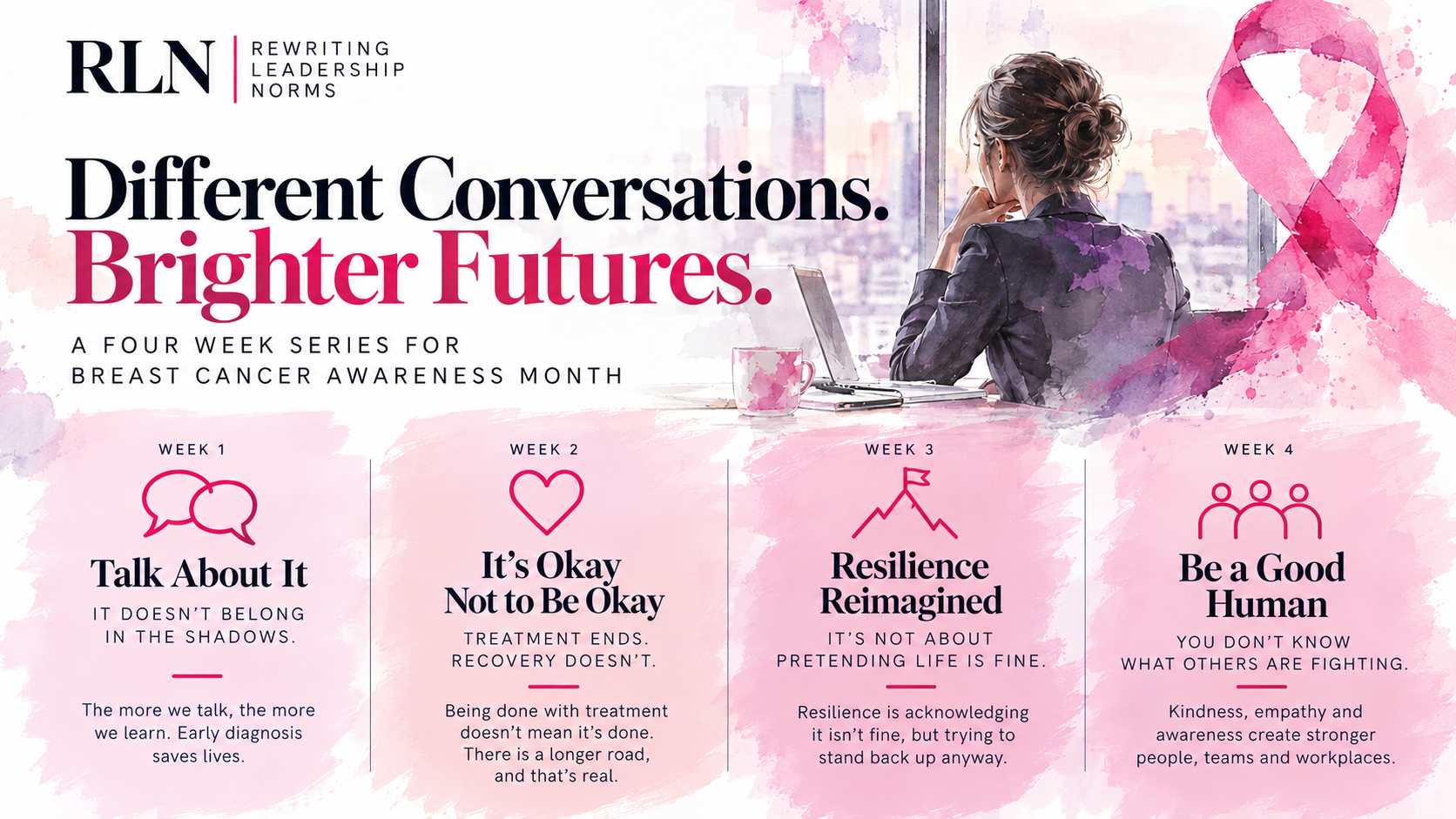
Resilience is an overused word. We often use it to describe someone who barrels through without acknowledging the emotion, the fear, or the sheer suck of what is happening.
That is not how I define resilience.
My version starts with acknowledging what is awful. Sometimes it means sitting in it for a while. Sometimes it means throwing yourself a decent pity party. Then, when you are ready, you stand back up again.
Cancer requires a level of resilience most people never expect to need. I remember meeting a good friend for a walk early in my treatment. Afterwards, we were sitting on the curb near the car park, talking about what the coming week looked like.
Her week was full of the normal things life contains. Mine was almost entirely medical appointments. I remember turning to her and saying, “It’s amazing how quickly my world has shrunk to this.”
That is one of the things cancer does. Your world can become very small, very quickly.
Life starts to organise itself around the next scan, the next test, the next treatment, and the hope that whatever comes next gives you another reason to believe you can win the fight. It reaches into almost every part of who you are.
Your identity changes. Your body changes. Your appearance changes. Surgery, chemotherapy, hair loss, scars, fatigue, and medication can make the person in the mirror feel unfamiliar.
The assumption that your life is fundamentally safe disappears as well. For anyone whose treatment goes beyond surgery into chemotherapy, radiotherapy, immunotherapy, or some combination of them, resilience becomes physical too. You have to keep getting up and going back into the treatment room, even when every part of you would rather be anywhere else.
There is strength in that. There is dignity in it too. For me, though, resilience only worked when I stopped pretending the awful parts were not awful.
I threw myself a pity party almost every day. I would wake up and, for a few seconds, forget. Then I would see myself in the mirror, see my bald head, and remember all over again. So I made myself a deal. I could have the pity party. I could feel sorry for myself. I could be angry, sad, frightened, or completely fed up. By 10 a.m., though, I had to start finding my way back.
I would deliberately reframe where my head and heart were sitting. Usually, that meant gratitude. Gratitude that I had another day. Gratitude that there was treatment available. Gratitude that I still had the opportunity to fight.
The pity party was not the opposite of resilience. For me, it was part of it. People would tell me how strong I was. How inspirational I was. I never really knew what to do with that. I was not trying to be inspirational. I was trying to survive in the best way I knew how.
What looked like strength from the outside often felt much less impressive from the inside. It looked like getting through the next appointment. Standing back up for the next round. Letting myself fall apart for a while, then finding a way to put myself back together enough to keep going.
That is why I think we need a different definition of resilience, that is the norm worth rewriting.
At work, we often reward the person who looks untouched by what they are carrying. We call them resilient because they kept performing, stayed calm, did not cry, and did not make anyone else uncomfortable.
But emotional suppression and resilience are not the same thing. Sometimes resilience looks messy. Sometimes it starts with admitting that something is terrible. Sometimes it includes anger, fear, grief, self-pity, or a morning spent feeling very sorry for yourself.
The strength is not in avoiding those things. It is in finding your way back from them. And when you get to the other side of something like cancer, you do not leave those lessons behind. You bring them with you. You bring them to work. You bring them into your family. You bring them into the way you lead, the way you make decisions, the things you are prepared to worry about, and the things you are no longer willing to waste energy on.
In some ways, you may be stronger. You know more about what you can survive. You know you can function when life is uncertain. You know how to keep moving when the plan has disappeared completely.
In other ways, you may still hurt. There may be fear that was not there before. There may be less patience, less certainty, or less willingness to tolerate things that once seemed important. Strength does not erase what happened. Both can be true.
You can be stronger and still hurt. You can be grateful and still angry. You can be back at work and still recovering. You can stand back up without pretending you were never knocked down.
That is the version of resilience I want us to recognise more often. You can acknowledge how hard something is, let yourself feel the full weight of it, and still keep moving. Sometimes resilience looks like strength. Sometimes it looks like exhaustion, tears, fear, or a pity party before 10 a.m. What matters is that, in your own time and in your own way, you keep finding a way to stand back up.