Credibility doesn't travel by itself
The question isn't whether your work is excellent. The question is: when someone who matters is in a room without you and your name comes up, what do they say?
The question isn't whether your work is excellent. The question is: when someone who matters is in a room without you and your name comes up, what do they say?
Tentative language, including hedges, qualifiers, excessive apologies, and diminutives like "just" and "quickly," consistently reduces observer assessments of capability and authority, independent of the quality of the idea being expressed.
The longer you have led, the more certain you tend to be that you know your organisation. New research across 300,000 people in 20 countries suggests that certainty is one of the least reliable things about seniority.

Good work doesn't speak for itself. Credibility is assigned based on what decision-makers know you've done, not what you've done. This week: why visibility is a structural problem, not a character compromise, and what to do about it.
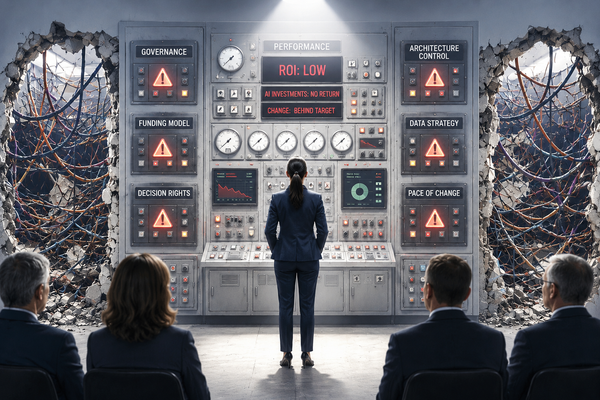
41% of technology leaders are considered unable to keep pace with change by their own boards. They are calling it a capability gap. When nearly half the C-suite lands in the same place, that is a pattern. Patterns live in systems, not people.
The most prepared person in the room is often the least credible one. It isn't that they don't know their material. They usually know it better than anyone else in there. They don't realise that over-preparation reads as anxiety, not capability.
The most effective leaders aren't the ones who can do everything. They're the ones who've learnt to resist the pull of doing everything, even when doing it would be faster, easier, and frankly more satisfying.

Over the course of the last year, I have worked with over ten different organisations, helping them to create the social contracts/